

Case studyLuxury Product · Self-Initiated Precision Test
01
The Brief
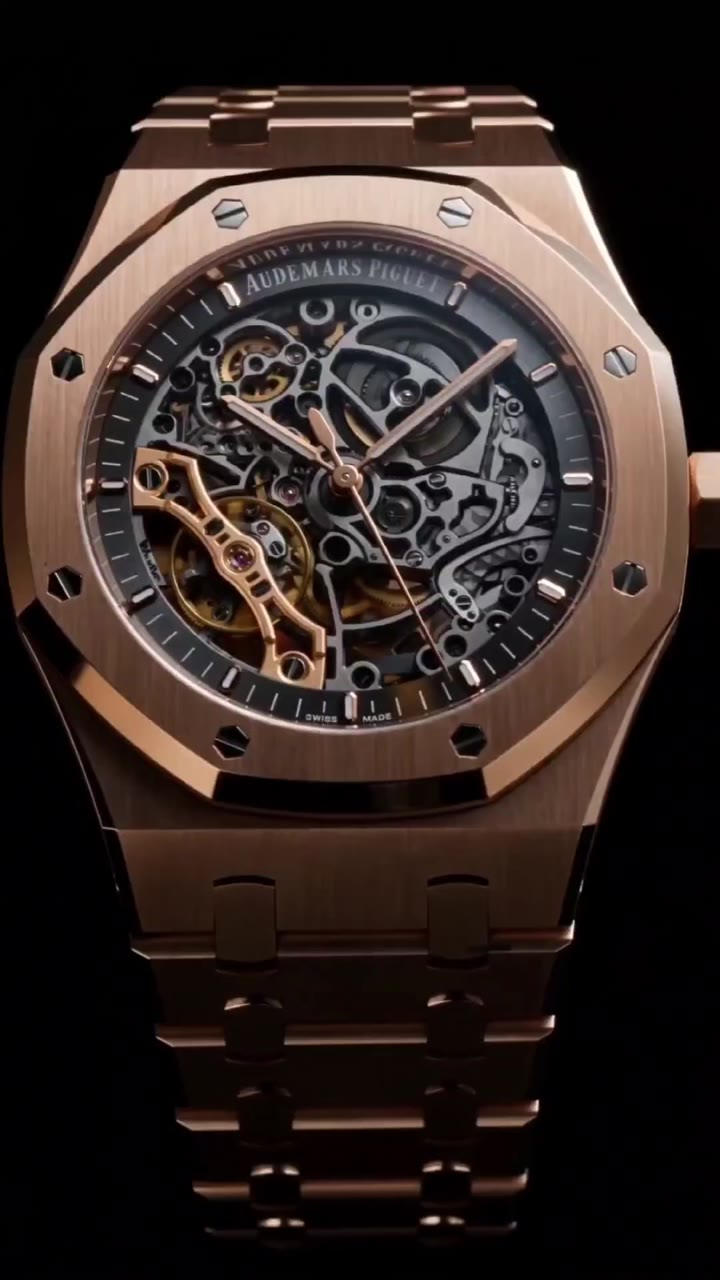
A watch gives a film very little room to improvise. Its dial, hands and case are studied at close range. Black Vertex made this AI watch commercial as a self-initiated precision test of the studio’s own boundaries and standards, and the standard it set was exacting: capture a watch’s minute details and preserve them across every shot. The goal was a refined cinematic treatment that would preserve the watch’s exact design language and fine details — the precision that premium craftsmanship expects from its advertising.
It was to be a luxury product film in which the watch is the subject and its craftsmanship carries the frame, part of the studio’s Product Reveal Films work. The imagery is AI-generated and the direction human; here, direction meant deciding what each shot would show and what it had to leave untouched.
02
The Challenge
The watch’s delicate, fine details made accurate recreation especially demanding. The risks were small and specific: case geometry, dial layout, hands, markings, materials, reflections and proportions. A slight difference in any one of them could make the product look incorrect. With a skeletonised dial that leaves the movement on show, a single close-up holds a great deal of fine detail.
So the production carried a strict requirement rather than a loose aim: pixel-level visual consistency, with no visible mismatches against the reference photographs. That is a high bar for any AI watch commercial, and the test set it for every shot, not only the hero frames. Polished metal, reflections and tiny markings are where AI imagery tends to drift, and this watch is built from exactly those surfaces.
03
The Solution
Two inputs defined what correct looked like: detailed reference photographs of the watch, and an explicit no-hallucination list naming the product elements where no interpretation was allowed. Together they served as the source of truth, and close-ups and hero frames were checked against them to keep the watch’s geometry and markings consistent from one shot to the next.
The cinematic side of the test was handled through variety. Repetitive advertisement imagery was replaced with varied, purposeful shots: distinct macro details, hero angles, material close-ups and wider contextual frames. Three of those shot types appear in the published stills. Macro shots travel across the rose-gold-toned skeleton dial and movement; a frontal hero view shows the watch on its matching bracelet; material studies take in the octagonal case edge, its brushed finish and the crown. Every change of view came from framing and cinematography. None came from changing the product.
04
Source Material
The source material came down to two things: detailed photographs of the watch, and the no-hallucination list. A list like that turns a general instruction — keep the watch accurate — into specific, checkable items, so every shot can be held to the same named details rather than to a general impression.
05
The Outcome
The finished film is an 8-second luxury watch ad in vertical 9:16. In place of repeated angles, it is a more varied and visually engaging product advertisement — one that protects the watch’s identity while giving its craftsmanship room to stand out. That is where the test’s standard shows in the film itself: the framing changes from shot to shot, while the watch is held to the same references throughout. For a luxury product film this short, much of its character lies in what it chose not to change.
06
Questions
What is a no-hallucination list?
On this project, it was a list of product elements that must not be invented, altered or hallucinated in the film. Read with the reference photographs, it separates what must stay true to the watch from what the film is free to vary, which here meant framing and cinematography alone.
Can an AI watch commercial keep a real watch’s details accurate?
That is the standard this test set itself, and accuracy was treated as a requirement and a process rather than a promise. The checks went to close-ups and hero frames because those shots put the most detail in front of a viewer, and on a watch a small difference in dial layout, hands or markings is enough to look wrong.
Which shots work for a luxury watch ad?
In this film, each shot type had its own job: macro details for the dial and movement, hero angles for the watch as a whole, material close-ups for finish and edges, and wider frames for context. Across eight seconds, that kept the film from repeating itself without asking the watch to change. It suited this project; it is not a universal shot list.
Facing a similar challenge?
Tell us what you’re working with — a single photo, a missing product, a location you can’t film — and we’ll show how this approach could apply to your project.